
If you’ve ever tried to talk about intimacy and ended up saying, “I don’t know… maybe?” for twenty minutes straight, you’re not alone. Most of us weren’t taught how to name what we want, what we don’t, and what we might like on the right day, with the right mood, and the right boundaries.
A yes no maybe list is basically a pressure-free way to turn vague feelings into clear words. Think of it like a shared map. Not a contract. Not a test. Just a better way to understand each other.
And the best part? It makes “No” easy to say, and even easier to respect.
What a yes no maybe list is (and what it isn’t)
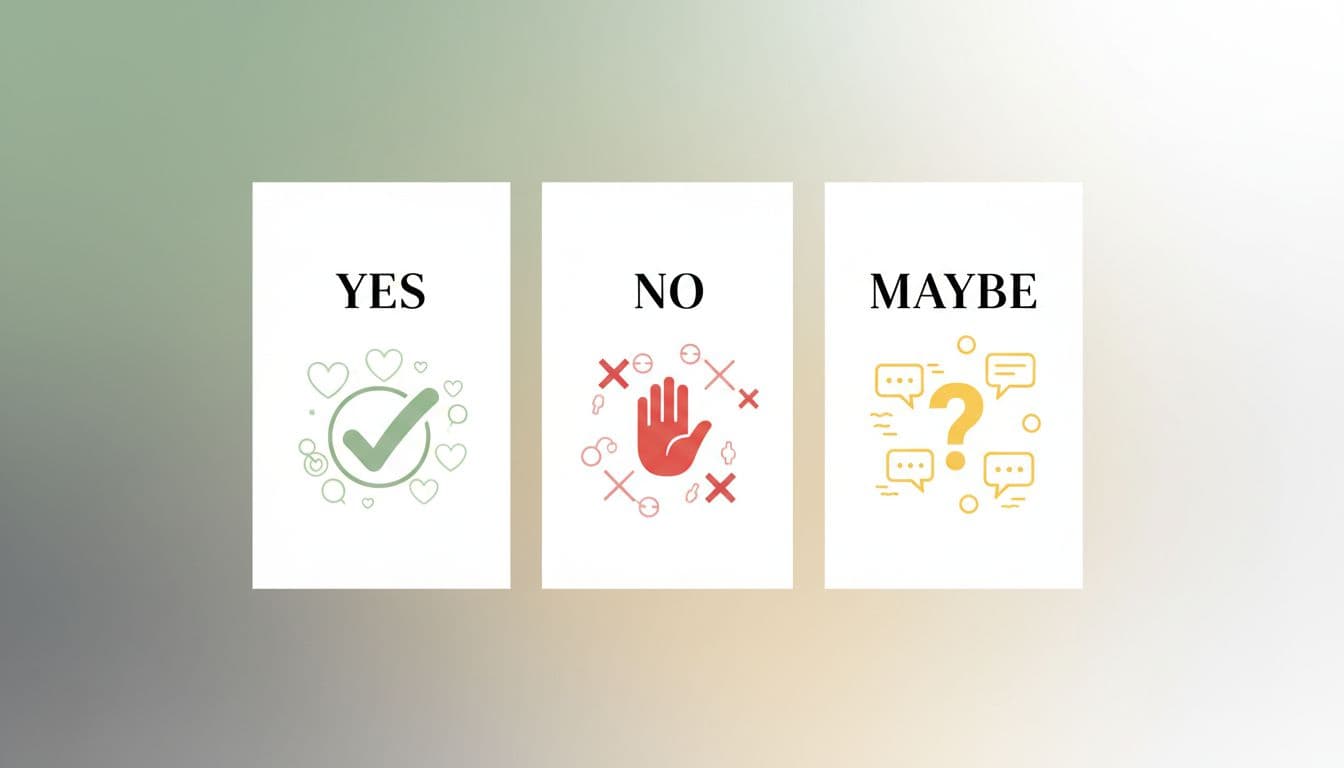
A yes no maybe list is a three-column checklist you each fill out privately, then compare together.
- Yes: “I’m up for this.”
- No: “Not for me.” (Full stop, no explanation required.)
- Maybe: “Could be, but I need more info, the right context, or a gentle trial.”
It isn’t a negotiation tool where someone tries to move items from “No” to “Yes”. If that’s the vibe, stop and reset. The whole point is autonomy, not persuasion.
If you want a ready-made template to start from, the Yes/No/Maybe checklist PDF is a solid, comprehensive option.
Consent first: the rules that make this feel safe
A list only works when it sits on top of real consent habits. My favourite “rules” are simple:
1) No is complete.
No reasons. No sulking. No “but why not?”. A “No” is a boundary, not an invitation to argue.
2) Yes has to sound like yes.
Enthusiastic, relaxed, present. If it’s hesitant or performed, treat it as a “Maybe” and slow down.
3) Maybe needs care.
“Maybe” isn’t “convince me”. It’s “let’s talk conditions and pace”.
If you want a quick reality check on what respectful relating looks like, the Healthy Relationships Checklist is a useful reference point (clear, practical, and not preachy).
A 20 to 30-minute date-night process you’ll actually finish

This is the bit most couples skip: setting it up so it doesn’t become awkward, heavy, or endless. Keep it light, keep it timed, keep it kind.
| Time | What you do | Goal |
|---|---|---|
| 3 mins | Agree the ground rules (No is final, no teasing, pause any time) | Safety |
| 10 mins | Fill in your lists separately | Honesty |
| 10 mins | Compare only the Yes/Yes overlaps first | Confidence |
| 5 to 7 mins | Pick 1 or 2 “Maybe” items to discuss (not do) | Curiosity |
A few practical tips that save the mood:
- Do it fully clothed, with snacks, like you’re planning a weekend, not “having a talk”.
- Keep phones away, but keep a pen handy.
- If either of you feels flooded or embarrassed, take a two-minute breather and come back.
Conversation scripts that prevent a spiral
The words matter. The goal is clarity without pressure. Here are a few scripts I’ve used (and suggested) that keep things steady.
To start the chat:
“I want this to feel safe for both of us. We’re not trying to win, we’re trying to understand.”
When you see a No you weren’t expecting:
“Thanks for being clear. I’m not going to push. Is there anything you want me to know about what helps you feel safe in general?”
When you’re the one saying No:
“That’s a no for me. I’m not up for discussing it further.”
(That last line is a gift, by the way. It stops you from over-explaining and stops your partner from problem-solving your boundary.)
When something lands in Maybe:
“I’m not sure. I might be open to a tiny version of it, with clear stop words and a short time limit.”
How to phrase boundaries (without writing a legal document)
Boundaries aren’t buzzkills. They’re the settings that make “yes” feel real.
Here are examples you can copy and paste into your own wording:
| Boundary type | Example phrasing you can use |
|---|---|
| Time limit | “I’m open to trying it for 5 minutes, then we check in.” |
| Conditions | “Only if we’ve talked it through first, and we’re both sober.” |
| Frequency | “Once a month max, and only if we both suggest it.” |
| Location | “Only at home, with the door locked, and no surprises.” |
| Aftercare | “Afterwards I’ll need a cuddle and a quick chat, even if it was fun.” |
You’re aiming for simple and kind, not vague and hopeful. Clear beats confusing every time.
The Maybe column: a mini try-it plan (start small, stop anytime)
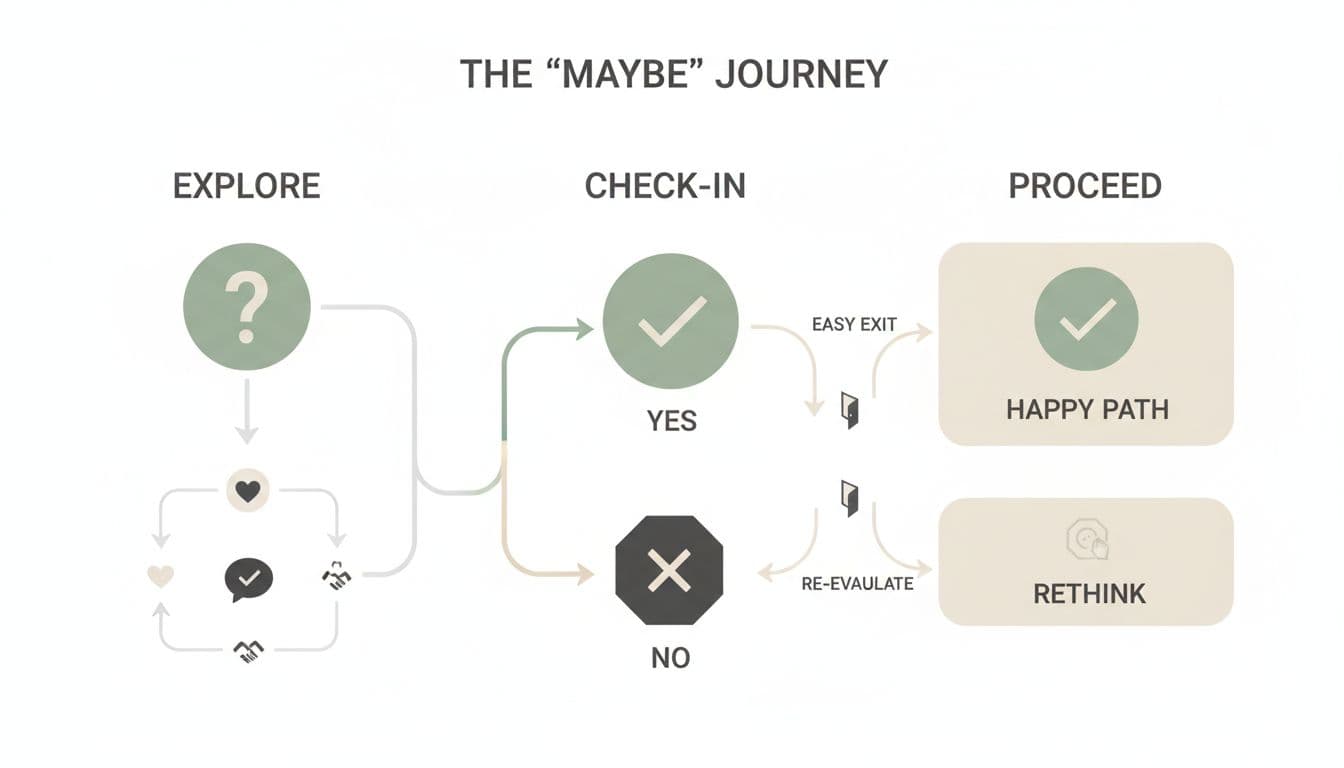
This is where couples get stuck, because “Maybe” can feel like a waiting room with no exit sign. So give it a structure.
The try-it plan:
- Pick the smallest version of the idea. If it’s “Maybe”, make it “Maybe-lite”.
- Set one clear stop signal (a word or gesture), and agree it ends the activity instantly.
- Check in twice: once after 30 to 60 seconds, then again at the end.
- Debrief for two minutes: “Keep, tweak, or bin?”
What I love about this approach is that it protects the “No” while still making room for curiosity. If either of you isn’t enjoying it, you stop, no fallout, no guilt.
If you want more examples of how people use inventories like this, Scarleteen’s Yes, No, Maybe So stocklist is a long-running, consent-forward resource (updated recently, and inclusive in tone).
When desires don’t match (and that’s normal)
Mismatched desire is common. It doesn’t mean your relationship is broken. It means you need a plan that doesn’t turn one person into the “gatekeeper” and the other into the “asker”.
Try this:
- Name the feeling, not the request: “I’m feeling rejected” lands better than “You never…”.
- Look for adjacent yeses: If one person says no to the activity, is there a yes to closeness, affection, or a different pace?
- Remove scorekeeping: No one “owes” a yes because you said yes last time.
If the gap feels big, focus on building safety and connection first. Pressure makes desire shrink.
FAQ
What if my partner says no to everything?
Start smaller. Ask what “yes” looks like outside intimacy: affection, compliments, quality time, privacy, rest. Sometimes a blanket “no” is stress, body image worries, pain, fear, or past experiences showing up. If it stays stuck, consider professional support.
What if one of us feels embarrassed?
Normal. Agree you can pass on any item without explanation. You can also swap talking for writing: share lists, then discuss only the overlaps in a second chat.
Can this work for long-distance, open, or non-monogamous relationships?
Yes, with one extra step: define who the list applies to. Is it “with you only”, “with any partner”, or “with agreed people under agreed rules”? Clarity keeps things fair and drama-free.
Conclusion (and a quick safety note)
A yes no maybe list works because it makes consent practical. It gives you shared language, fewer assumptions, and more room to be honest without hurting each other.
Try it once, keep it short, and treat every boundary as valid. If there’s coercion, trauma, or conflict that won’t shift, this article isn’t therapy, and it can’t replace it. In those situations, reach out to a qualified relationship or sex therapist, or a support service, and prioritise safety over “making it work”.